Osteoporosis, also known as the “silent disease” because it can develop without being detected until a bone breaks and the sufferer discovers it, is a condition in which bone density decreases, increasing the risk of fractures. In both women and men, bone density increases until about the age of 30 and then gradually begins to decrease.
Exactly because osteoporosis is “silent,” the importance of prevention plays a significant role. Bone Mineral Density (BMD) testing shows whether someone has normal bone density, low bone density, or osteoporosis. The lower your bone density, the higher your risk of fracture.
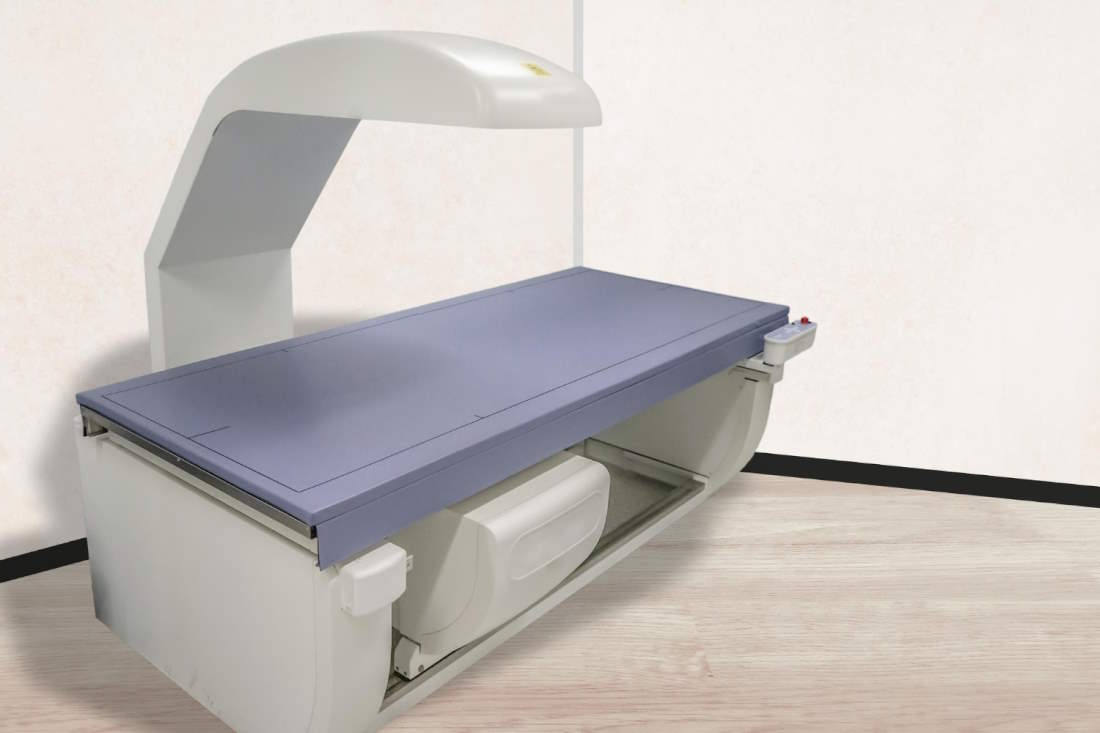
This is a non-invasive and painless examination that focuses on a point in order to calculate the amount of bone and determine whether the individual is healthy or suffers from osteopenia/osteoporosis. During the examination, the examinee lies under the special scanner without needing to remove their clothes, which moves along the patient's body to image the area of interest. The whole process does not take more than 15 minutes. The DEXA method is based on the use of X-rays, but the dose received by the examinee is extremely low.
BMD testing is mainly recommended for:
Our philosophy is based on the excellent quality of the image and the accuracy of diagnoses, offering a range of radiology services that include digital radiography, ultrasounds, computed tomography (CT), and other specialized examinations.